
Last updated November 21, 2026
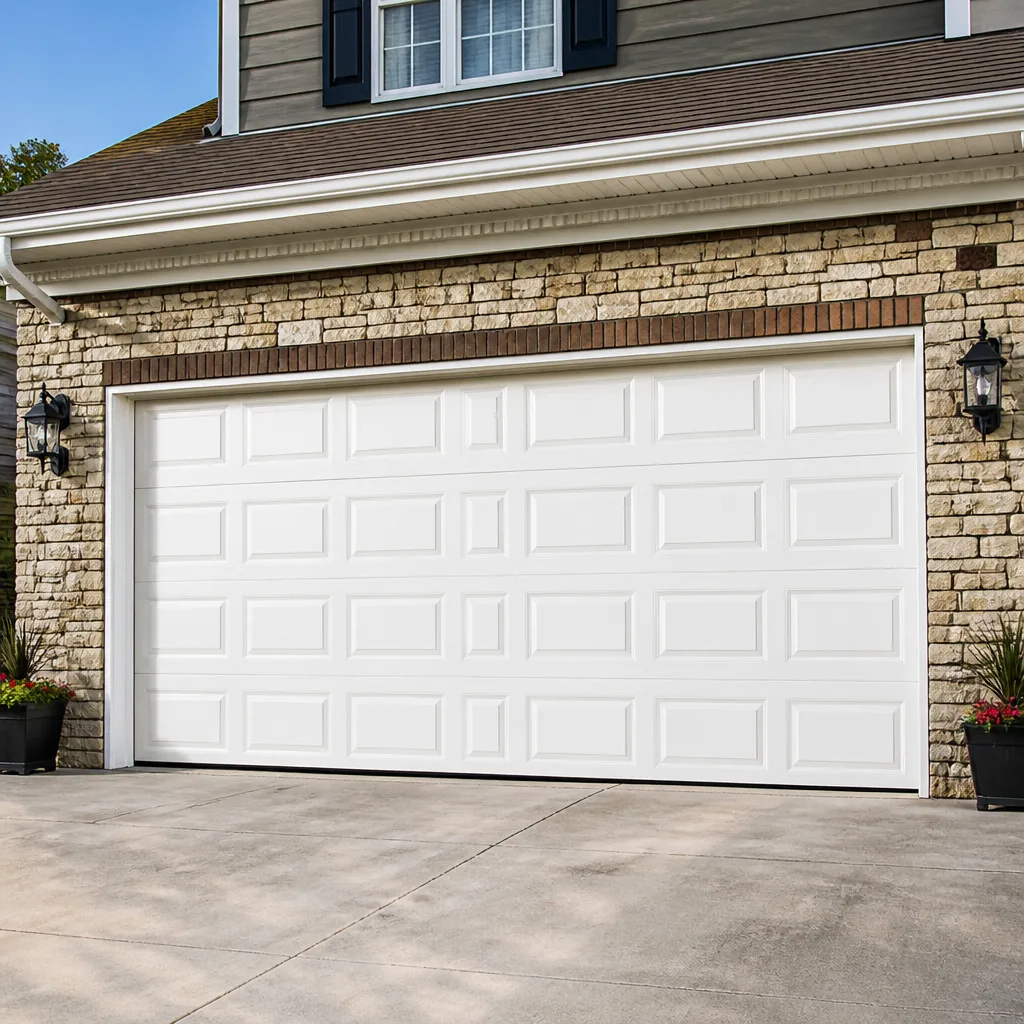 Raised-panel steel
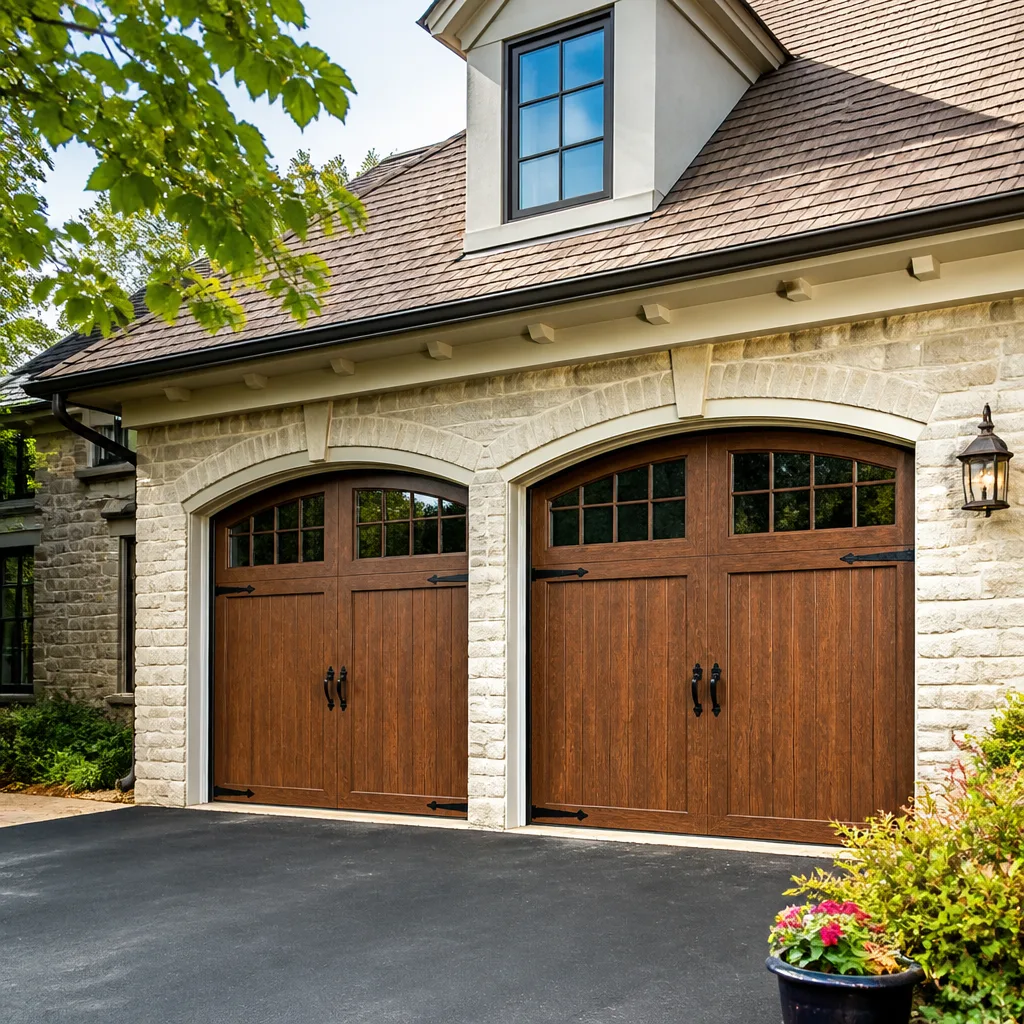 Carriage house
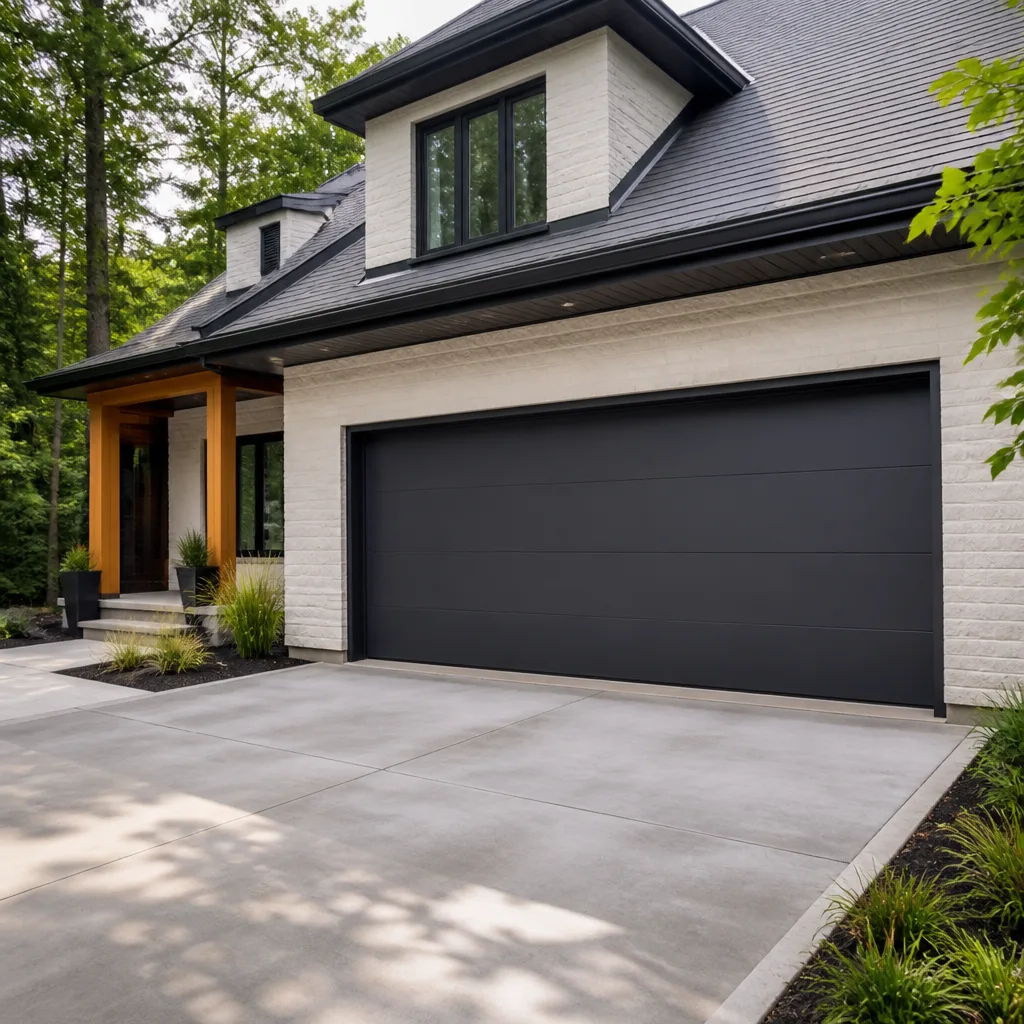 Modern flush
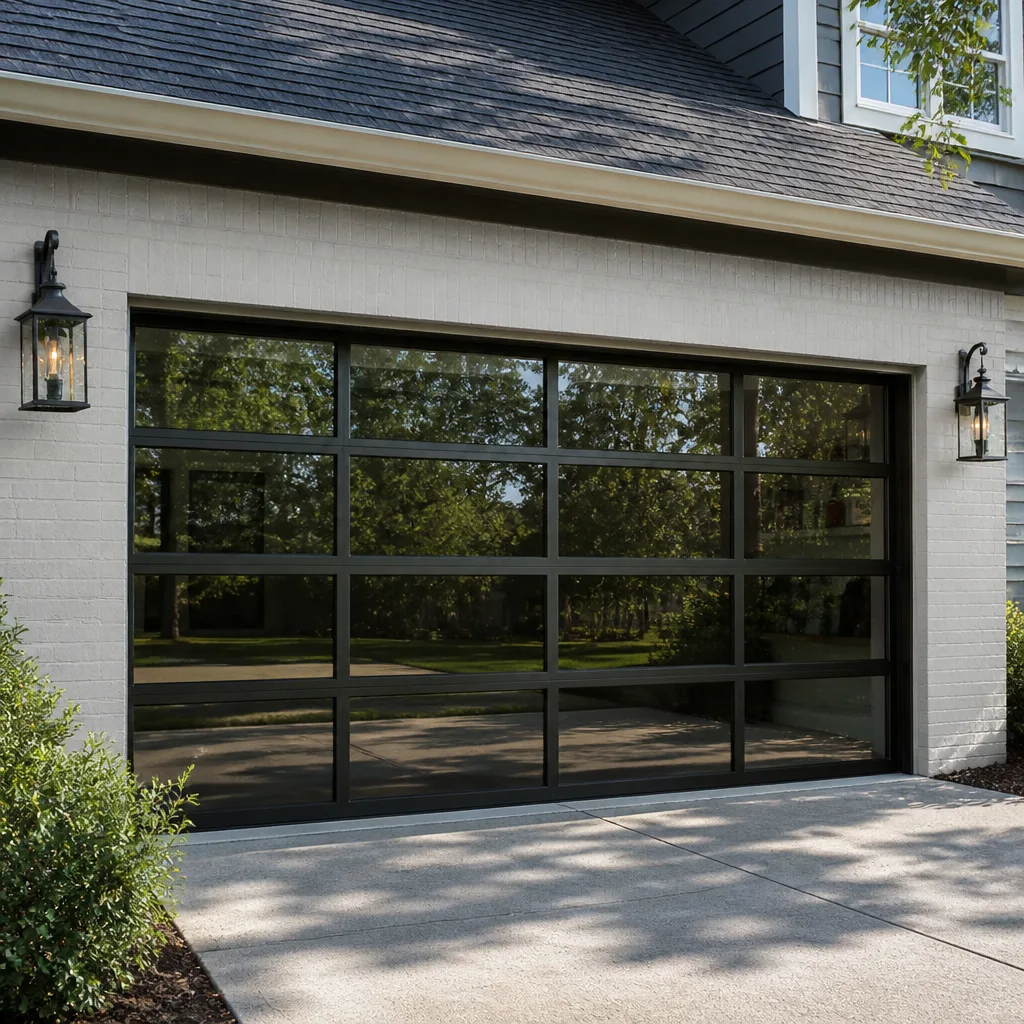 Full-view glass
 LiftMaster openers
 Chamberlain openers
Full 25-point door and opener safety check with every visit - springs, cables, rollers, tracks, and your LiftMaster or Chamberlain opener included
You get a price before we start. It does not change when the pro arrives.
Get your free estimateGarage Door Warning Signs: A Renton Homeowner’s Reference Guide
A garage door that moves unevenly from side to side isn’t a cosmetic problem, and it isn’t something to watch for a few more weeks. It usually means one spring is carrying load the other isn’t, and the spring still doing its job is now running on a shortened clock. The mistake we see most often in Renton isn’t ignoring a garage door problem. It’s misreading which problems are safe to schedule and which ones need a same-day stop. A door that scrapes on the way up can wait for an appointment. A door with a snapped cable should not be opened again until someone qualified looks at it.
This guide sorts garage door warning signs into tiers by urgency, explains what the different sounds and visual cues actually point to mechanically, and gives you a clear line between “book it this week” and “stop using the door now.”
Quick Answer
Garage door warning signs fall into two groups: immediate safety stops and scheduled maintenance items. A broken torsion spring, a snapped lift cable, a door that has jumped its track, or any door that reverses before it reaches the floor needs same-day attention and should be taken out of service until a technician inspects it. Grinding noises, sluggish movement, worn rollers, and a remote that only works up close can usually wait for a scheduled appointment. In Renton, the cold, damp mornings between fall and spring produce a batch of false alarms that look serious but usually trace back to a sensor or a stiff lubricant, and knowing that difference saves homeowners a lot of unnecessary worry.
Styles & brands we work with
- Raised-panel steel
- Carriage house
- Modern flush
- Full-view glass
- LiftMaster openers
- Chamberlain openers
Table of Contents
- The Two-Tier Severity Framework: Stop Now or Schedule Soon
- What Each Sound Actually Tells You
- Visual Tells on Torsion Springs Before They Snap
- Opener Struggling vs. Door Weight Problem: Two Very Different Repairs
- Renton Weather and the False Alarms It Produces
- Uneven Travel, Binding, and Off-Track Doors
- Reading Wear on Older Doors
- A 10-Minute Monthly Inspection Checklist
The Two-Tier Severity Framework: Stop Now or Schedule Soon
Every garage door symptom you’ll encounter belongs in one of two buckets. Getting the diagnosis right matters less than getting the urgency right. Here’s how we sort them.
Tier 1: Same-day safety stops
- Broken torsion spring or extension spring. A snap you heard from inside the house, followed by a door that won’t lift or lifts a few inches and stops, is almost always a spring failure. Springs hold the door’s full weight. Opening the door with a broken spring puts that load on the opener and the cables.
- Snapped lift cable. Cables run at high tension along the sides of the door. A snapped cable means an unguided door that can come down hard or twist off its track.
- Door off track. If the door has jumped its rollers or is hanging unevenly with one edge out of the rail, don’t run the opener. A door that comes down crooked can bend the panels or drop a section.
- Door reversing before it reaches the floor, or failing to reverse on contact. The safety reverse is the one feature that stops a door from closing on a child, a pet, or a car. If it’s unreliable, treat it as a stop until a technician checks the sensors and the opener’s force settings.
- Door coming down faster than normal. If a door slams instead of settling, a cable or spring has lost tension.
Tier 2: Schedule an appointment
- Grinding, squeaking, or popping that isn’t accompanied by a sudden loss of function.
- An opener that works from up close but not from the driveway.
- Worn rollers, fraying weather seal at the bottom, or a door that doesn’t sit flush on the concrete.
- A door that runs but seems to work harder in cold weather.
- Balance issues noticed during the manual-release test (see the inspection checklist below).
In our experience, most Renton homeowners who call after a loud bang from the garage are in Tier 1 and already know something went wrong. The harder call is Tier 2, where a symptom has been quietly building for weeks and the owner has talked themselves into waiting. Those are the repairs that become expensive when they progress.
What Each Sound Actually Tells You
The noise your door makes is diagnostic. Different sounds come from different parts of the system, and knowing which is which tells you what to point to when you call.
Grinding
Grinding usually comes from metal-on-metal contact in the moving parts. Rollers with worn or seized bearings, a torsion tube binding at its center bearing plate, or a track that’s been knocked slightly out of alignment can all produce a grinding that rises and falls as the door travels. Grinding is a scheduled-repair sound unless it’s happening alongside a door that’s noticeably harder to lift.
Popping or snapping
A sharp pop when the door first starts moving is often the torsion spring or the cable drum slipping. A single loud snap followed by the door going dead is a spring failure. Popping that repeats on every cycle can also come from a loose panel or a hinge with a broken roller. Because popping is the sound category that most often signals a Tier 1 problem, treat a new pop as a reason to stop using the door until it’s diagnosed.
Scraping
Scraping is usually the door panel rubbing against the track or the frame, sometimes because a hinge has bent and pushed a roller off-center. It can also come from a section that has warped and is dragging along one side. On colder mornings in Renton, a scrape that goes away once the door warms up is often the weather seal catching the frame or a stiffened roller.
Rattling
Rattling is the least urgent sound and usually traces back to loose hinge bolts, a loose opener chain, or worn rollers in the vertical track. If the rattle is new and got noticeably louder over a few weeks, have it checked before the underlying hardware fails.
Squealing
A high squeal during travel is usually dry rollers or a dry torsion tube. Lubrication on the torsion springs, hinges, and rollers is one of the highest-value maintenance habits a homeowner can pick up, and it almost always quiets a squeal.
Visual Tells on Torsion Springs Before They Snap
Most torsion spring failures aren’t completely sudden. If you look at the springs periodically, you can often spot two or three warning signs before the break. Torsion springs are mounted on the shaft above the door, and on a two-spring setup they run side by side. Here’s what to look at, and always with the door closed and the opener disengaged.
Rust patterns
Springs are oil-tempered steel, and rust is their enemy. Look for concentrated rust at the coil ends and along the coiling. A spring with a bright rust ring near the winding cone is often one that’s lost temper and is on its way out. Uniform surface discoloration across the whole spring is less concerning than a band of rust that’s forming in one spot.
Gap formation
On a healthy spring, the coils sit close together with a small, even gap between each coil. If you see a wider gap appearing at one end, or a gap that seems to have opened up since the last time you looked, that spring is deforming. A widening gap or a stretched-out coil pattern means the spring has lost part of its tension.
Deformation at the winding cone
The winding cone is where the spring attaches to the shaft. If the cone looks cracked, distorted, or if the set screws look loose, that’s a safety stop. The winding cone is under the full stored tension of the spring, and a failed cone is exactly the scenario that spring repair exists to prevent.
Door height dropping
If the door used to land flush on the concrete and now sits an inch or two higher when closed, or if it feels lighter than it used to when you lift it manually, the springs are losing their ability to hold the door’s weight. That’s a sign to schedule spring service before a break. Our technicians have up to 13 years of experience reading these signs on garage door spring repair calls, and a spring that’s within a few weeks of failure usually has two or three of these indicators at once.
Safety note: Never attempt to adjust, loosen, or replace a torsion spring yourself. The springs and cables are under high tension, and the winding operation is one of the most dangerous jobs in the trade. This is a case where a trained professional is not a nice-to-have.
Opener Struggling vs. Door Weight Problem: Two Very Different Repairs
When an opener strains to lift the door or stops halfway up, the cause could be the opener motor itself or the door’s balance. Those are different repairs, at different cost ranges, and guessing wrong wastes money. Here’s how to tell which side of the system the problem is on.
The manual-release test
- Close the door fully.
- Pull the red manual-release cord hanging from the opener rail to disconnect the opener carriage from the door.
- Lift the door about halfway by hand and let go.
- A properly balanced door stays where you let go, or drifts very slowly. A door that sinks or drops is out of balance.
- Lower the door and re-engage the carriage by running the opener and letting it catch the carriage.
What the results mean
If the door passes the balance test, the springs and cables are doing their job and an opener that still struggles has an opener problem. That could be a failing drive gear, a motor that’s aging out, a stripped belt or chain, or force settings that drifted out of adjustment. Opener repair is usually the fix, and on brands like LiftMaster, Chamberlain, Genie, and Craftsman, the troubleshooting path is generally clearer because the parts are widely supported.
If the door sinks noticeably or feels heavy to lift, the springs are no longer offsetting the door’s weight. In that case, replacing the opener won’t fix the problem; the door will keep dragging on the motor until the opener fails as well. Fixing the balance first is the correct order, and it’s typically a spring repair, not an opener repair.
A door that stays down but reverses mid-travel or stops without warning often points to opener force-limit calibration or a sensor misalignment, not a weight problem. On openers like LiftMaster and Chamberlain, the force settings live in the logic board and can be adjusted, but an out-of-spec force setting is often the way a struggling opener advertises a heavier door. If the door’s balance is fine and the opener still can’t lift it smoothly, garage door opener repair with a technician who knows the brand is the correct next move.
Renton Weather and the False Alarms It Produces
Renton sits in the lowlands of western Washington, in the rain shadow of the Cascades to the east and the Olympics to the west, and the pattern of cold, wet mornings followed by mild, damp afternoons drives a specific set of false alarms every fall and spring. Knowing what’s a weather artifact and what’s a sensor problem saves a lot of guesswork.
The cold-morning reverse
On the first few cold mornings of the year, it’s common for a door to reverse partway down or stop before reaching the floor. The usual cause is a stiffened weather seal at the bottom of the door, a lubricant that’s thickened with the cold, or a slightly binding roller on the vertical track. Once the door warms up or cycles a few times, the problem often resolves on its own. If it doesn’t, or if the door reverses on its own without any trigger, that’s a sensor or opener issue and worth a scheduled visit.
Sensor misalignment
The safety sensors sit near the floor on each side of the door opening and pass a light beam between them. Rain, wind-blown debris, a knocked sensor from a bumped garbage can, or a spiderweb across the lens can break that beam and the door won’t close. The sensor LEDs on the back of each unit tell the story: a steady light on both usually means alignment is fine, while a blinking light on one side almost always means the beam is broken. A gentle realignment and cleaning handles most of these cases.
Sluggish cold-morning movement
A door that moves slightly slower on cold mornings isn’t unusual. Cold grease on the torsion spring, hinges, and rollers adds drag. If you notice the door slowing 30 seconds or a minute into a cold morning but returning to normal later in the day, that’s lubricant behavior. If the sluggishness continues regardless of temperature, that’s weight or opener force, and it needs a scheduled look.
What’s not a Renton problem
Renton’s weather doesn’t produce the kind of ice buildup or extreme thermal cycling that damages a door’s hardware the way deep-cold regions do. The bigger local wear factors are moisture (which accelerates rust on springs and hinges), cooling cycles (which slowly loosen track bolts), and the long fall-winter-spring wet stretch that keeps the door and opener cycling through every one of those days.
Uneven Travel, Binding, and Off-Track Doors
Watch the door’s bottom edge as it closes. On a healthy door, both ends touch the floor at almost the same moment. If one side reaches first, the door is traveling unevenly and something in the lifting system is uneven.
Uneven side-to-side travel
Uneven travel is often the first symptom of a spring starting to fail. On a two-spring torsion setup, each spring carries half the door’s weight. If one spring loses tension, the other side of the door lifts higher and the door looks lopsided on the way up. On a single-spring setup or an extension-spring door, uneven travel usually traces to a dropped or loose cable on one side. In either case, the door is now loading the working spring unevenly, which shortens that spring’s life. This is exactly the scenario that turns a single-spring repair into a pair.
Binding and dragging
A door that binds at the start of travel and then moves smoothly is often a roller that’s left its track or a hinge that’s bent. Binding that gets worse as the door goes up usually means the opener is fighting weight. The distinction matters: binding from alignment is a track-and-hinge repair, while binding from weight is a spring repair.
Off-track doors
A door that’s jumped a roller is unsafe to run. Even if it still opens, running an off-track door with the opener can bend panels, drop a section, or damage the carriage. When a door comes off track, don’t try to force it back with a pry bar or lift it manually to see if it resets. Leave it, and call for service. For an off-track door or a spring failure, our Renton Garage Door Repair Pros team is set up with same-day service, and we can typically have a technician out the same day. Call (833) 508-9224. We answer 24/7.
Reading Wear on Older Doors
Garage doors age in predictable ways. A door that’s been installed and used for years is going to show wear on specific components before the whole system fails. Here’s what to look for, roughly in the order it shows up.
Rollers first
Rollers are cheap, high-wear parts. Nylon rollers tend to last longer before they develop flat spots; steel rollers with worn bearings start to squeal and grind. Rollers that turn loosely, wobble on the stem, or have a visibly flattened spot usually need replacement on a scheduled visit.
Springs next
Torsion springs have a finite number of cycles. Each open and close counts. A spring set on a busy residential door handles tens of thousands of cycles before it’s expected to fail, but the wear accelerates when the door is out of balance or the springs are exposed to moisture. Watch for the visual tells above and listen for a change in the door’s sound.
Cables after the springs
Cables fray at the drum end first. A cable with a broken strand sticking out should be scheduled for replacement even if the door still operates. Fraying isn’t a surprise so much as a slow wear process that reaches a predictable end.
The door panels themselves
Panel wear shows up as dented or warped sections. When a panel warps, it can’t sit flush against the frame and the door no longer seals properly. Brands like Clopay and Amarr structure their panels and hardware so panels can be replaced individually in many models, which is a cheaper path than a full door replacement in some cases. When replacement does make sense, garage door installation with the correct panel and hardware for your model is the cleanest solution.
The opener last
Openers outlive their door hardware surprisingly often, but they do reach a point where the drive gear strips, the logic board starts acting up, or the unit simply runs the door less smoothly than it used to. If your opener is a LiftMaster, Chamberlain, Genie, or Craftsman, we can typically diagnose it by brand and model, including remote programming and smart-home connectivity issues. If your door has a Wayne Dalton or Raynor opener or hardware, those are also brands we work with regularly and can service without you needing to track down a brand-specific contractor.
A 10-Minute Monthly Inspection Checklist
A short, regular inspection is the single best way to catch problems early. Here’s the routine we recommend to every homeowner we work with in Renton. Do it once a month, and it takes about 10 minutes.
- Look at the springs. Door closed. Check for rust, gap formation, and any deformation at the winding cone. Any sign of a dark rust band or a widened coil spacing goes on the schedule.
- Look at the cables. Check both sides for fraying or a strand that’s come loose. A broken strand means the cable gets replaced.
- Run the manual-release test. Disengage the door, lift halfway, and let go. The door should hold or drift slowly. A door that sinks needs a spring check.
- Listen for new sounds. Note any grinding, popping, or scraping that’s started since the last inspection.
- Check the sensors. Wipe the lenses and confirm both sensor LEDs are steady. A blinking light is a misalignment or an obstruction.
- Test the reverse. Place a small object (a piece of wood or a rolled-up towel) on the ground in the door’s path. The door should reverse on contact. If it doesn’t, get it serviced.
- Look at the rollers. Check for wobble, flattening, or a roller that’s popped out of the track.
- Check the weather seal. With the door closed, look at the gap between the bottom seal and the floor. A visible gap lets in rain and cooling drafts.
- Lubricate. A few drops of garage door lubricant on the torsion springs, hinges, and rollers quiets squealing and slows wear. Skip the track itself; it’s meant to be clean and dry.
- Test the remote and wall button. Both should operate the door. If one works and the other doesn’t, that’s an opener issue, not a door issue.
Log anything that’s new. The log is what turns the inspection from a one-off into a trend line, and the trend line is what tells you whether something is progressing.
Common Mistakes to Avoid
- Running a door with a broken spring. The opener is now lifting the door’s full weight, and it will burn out trying. Worse, the door is unguided, which means it can come down hard. Take it out of service and call for same-day help.
- Trying to realign an off-track door with a pry bar. A door that’s jumped its rollers is unpredictable. Force applied to one side can drop it or bend a panel. Leave it, and let a technician handle the track.
- Assuming every door that reverses in cold weather needs repair. In Renton, a stiff weather seal or thick grease is often the culprit, and it clears up once the door warms. Test first, and only book service if the reverse happens in mild weather too.
- Replacing the opener before checking door balance. A heavy door can retire even a good opener prematurely. The manual-release test takes 30 seconds and tells you whether the trouble is in the opener or in the springs.
- Ignoring a single loud pop. A pop when the door starts is often the spring or cable drum slipping. It rarely fixes itself, and the next pop can be the failure.
- Letting a squeal go for months. A dry roller or a dry torsion spring isn’t just an annoyance; the wear accelerates and the parts age faster than they have to. A $5 tube of lubricant applied every few months handles the most common cause.
- DIY spring replacement. We get asked about this often. Torsion springs are under dangerous tension, and the winding process is one of the highest-risk jobs in this trade. A trained professional with the right winding bars and technique is the only safe path, and a mistake here is serious.
See the difference
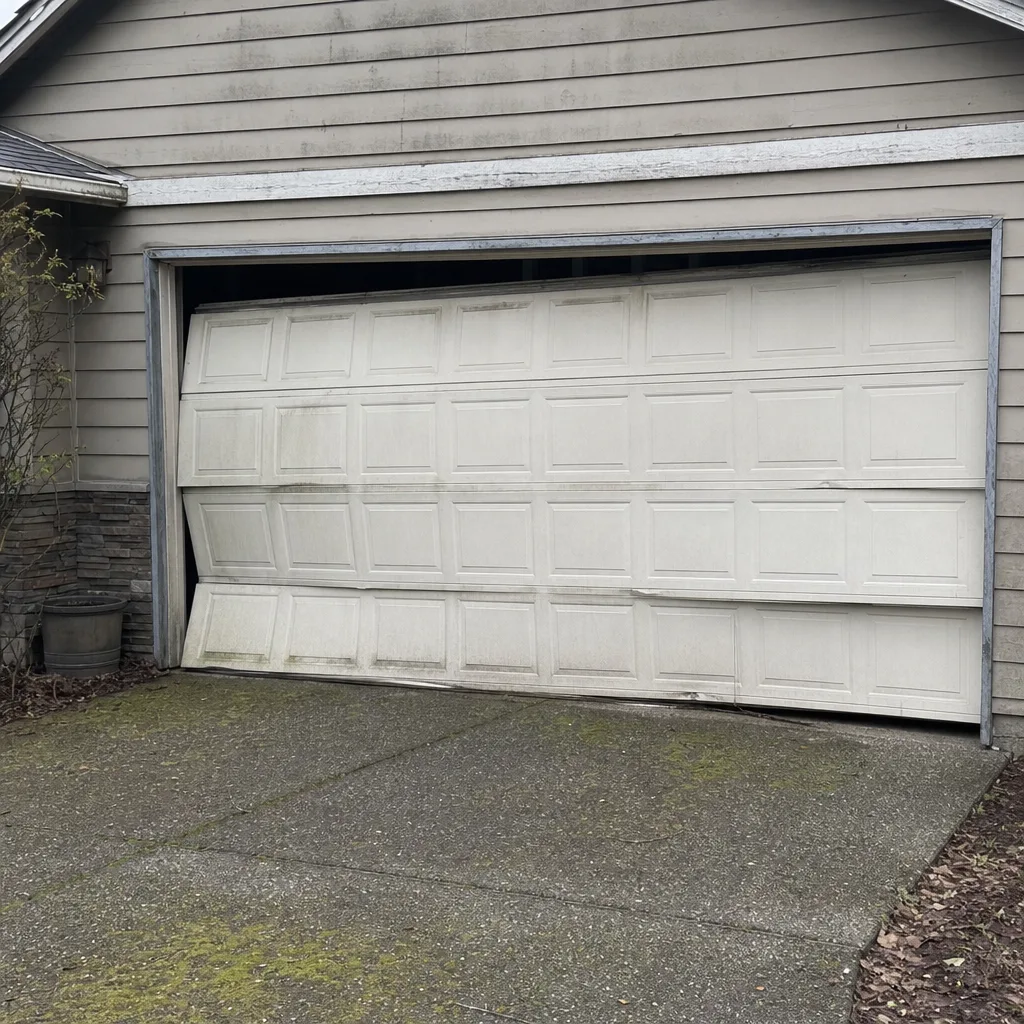 Before
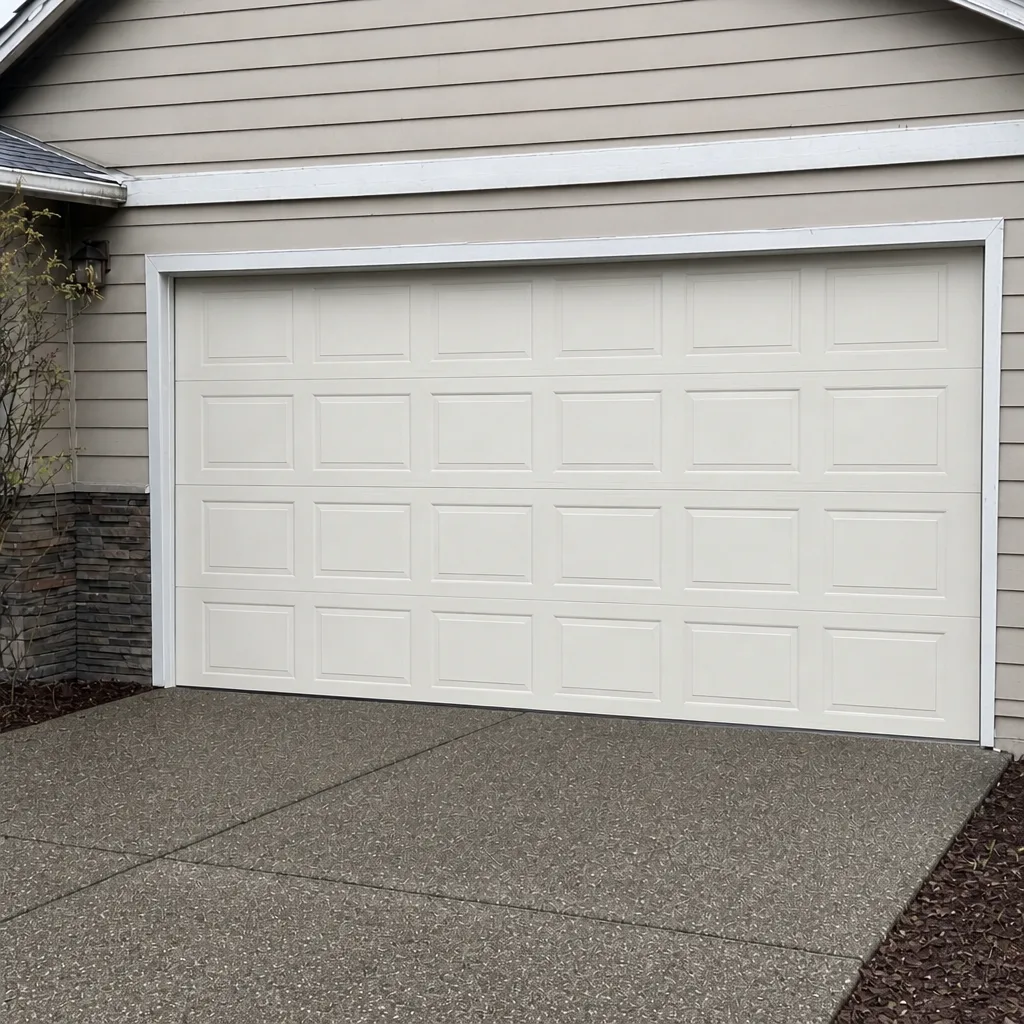 After
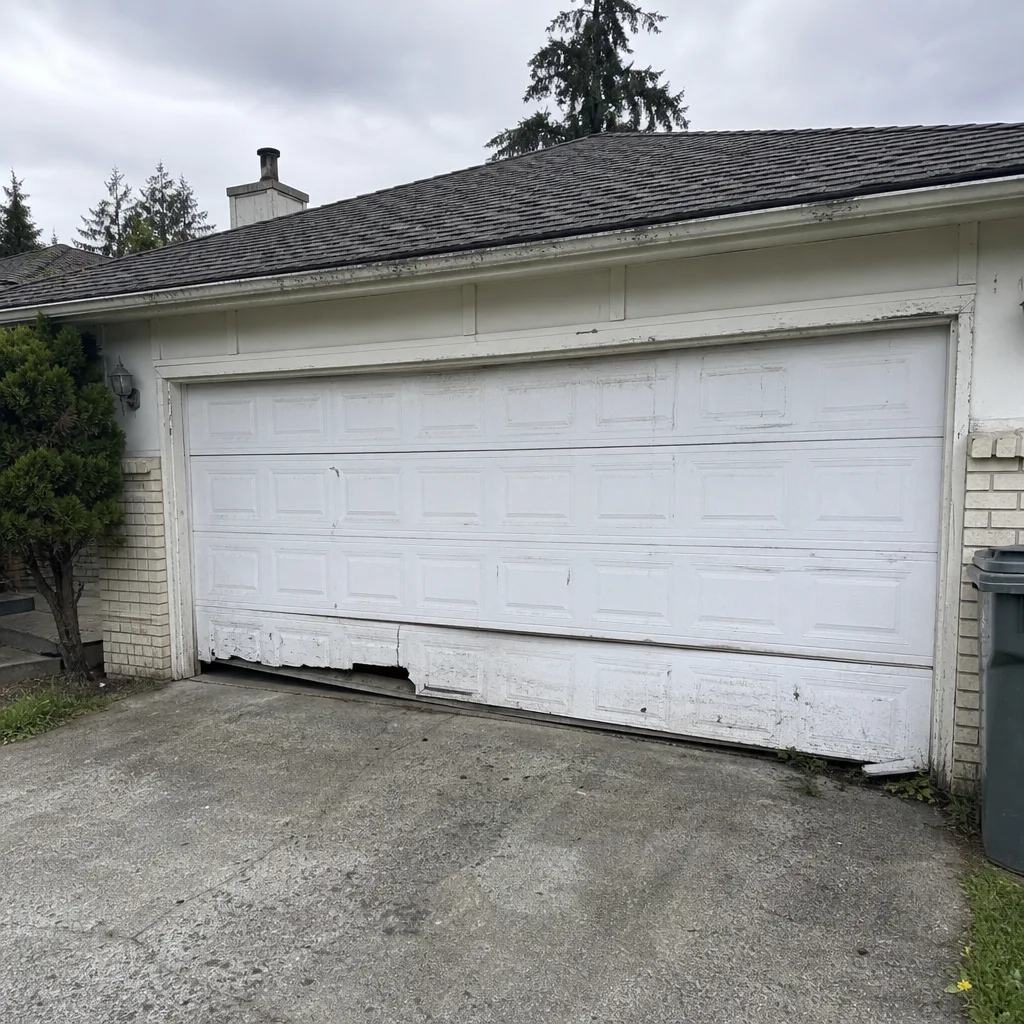 Before
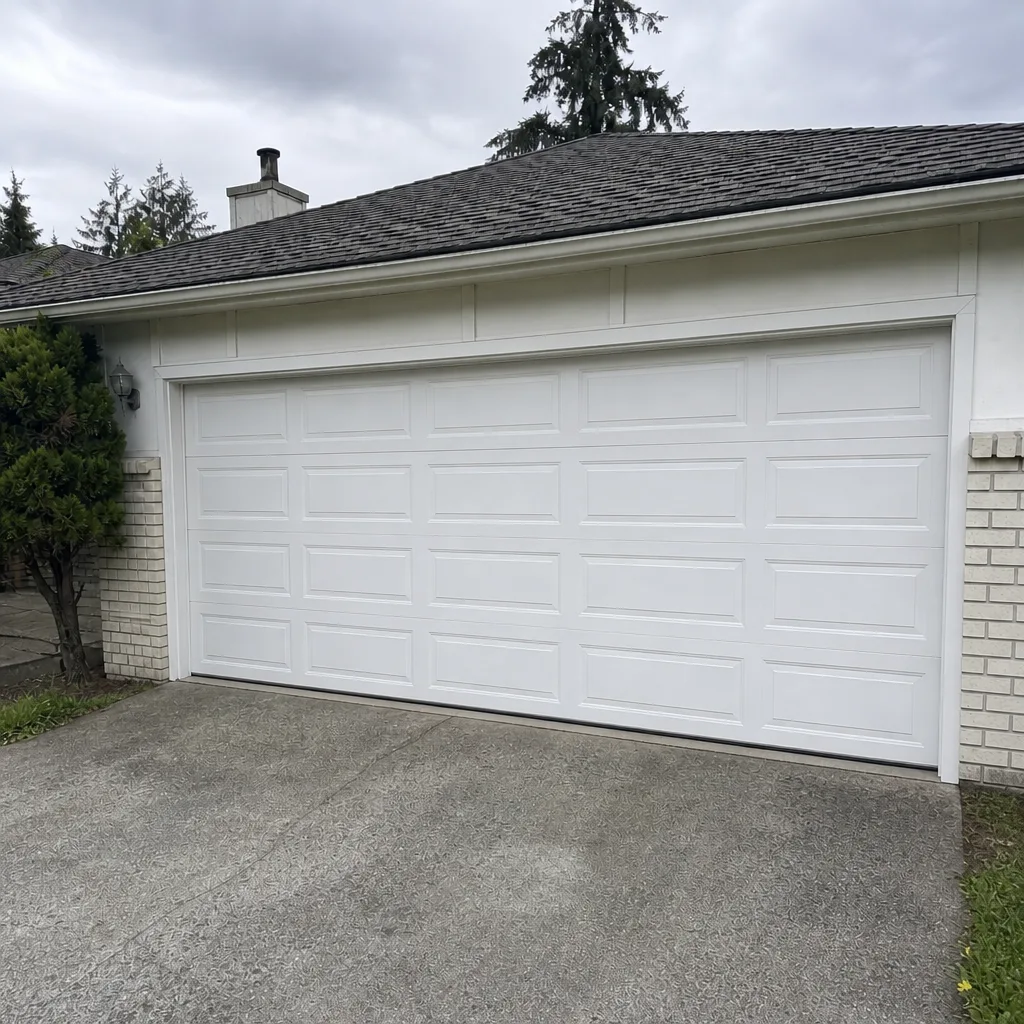 After
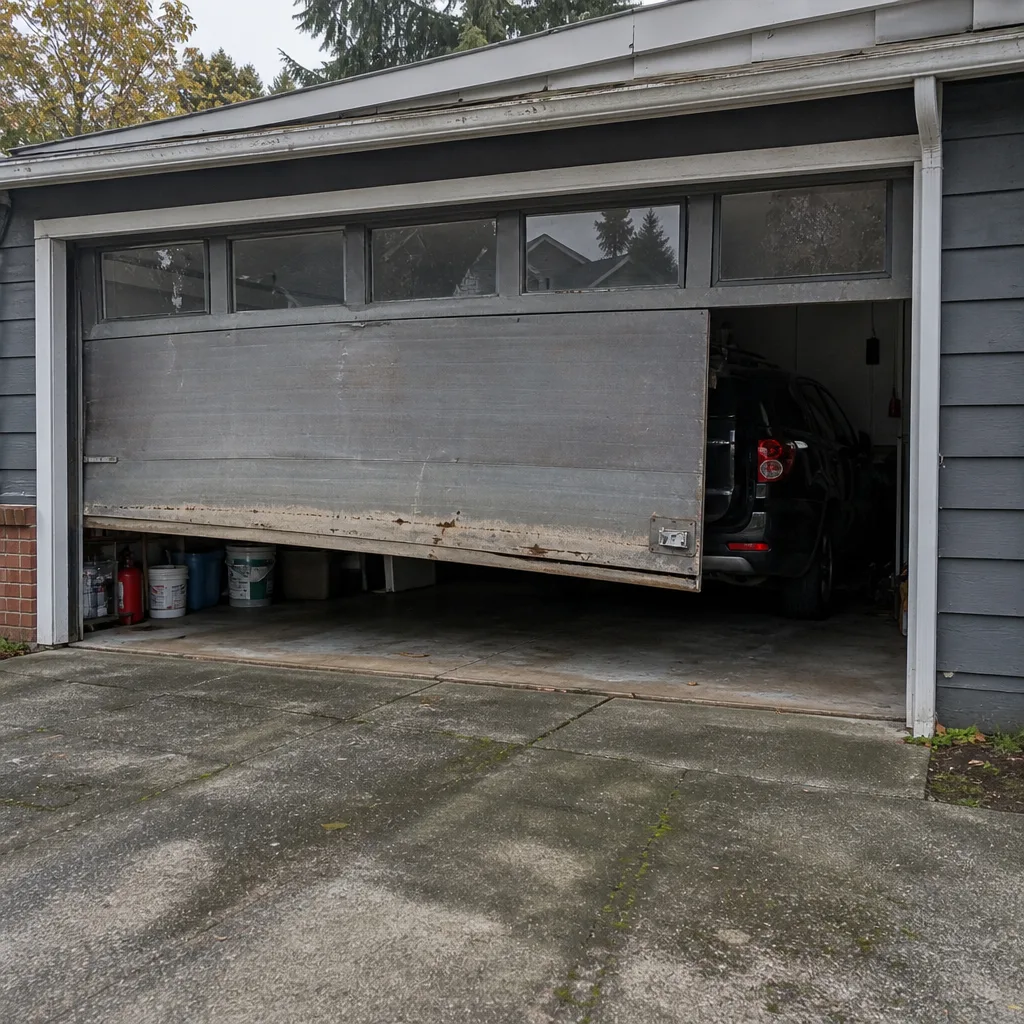 Before
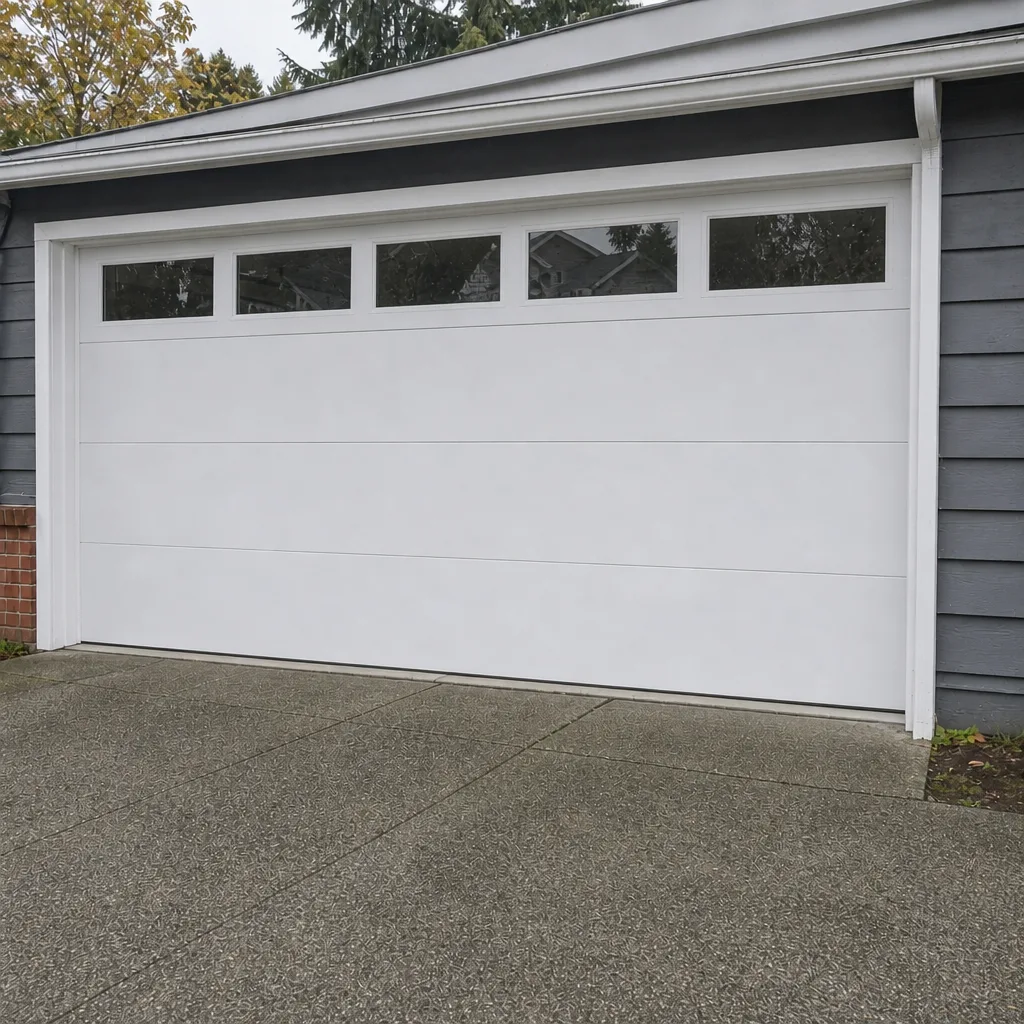 After
When to Call a Professional
Call when the door fails to lift, when you’ve heard a snap or a loud pop that changed the door’s behavior, or when the door has come off its track. Call when the safety reverse doesn’t work reliably; that’s the one garage door feature you can’t treat as optional. Call when the door lifts unevenly side to side, when you’ve noticed rust bands or gap formation on the springs, or when the manual-release test shows a door that sinks. On scheduled items like squealing, slowing movement, or a remote that only works up close, a scheduled appointment is the right call, and most of those get resolved in a single visit.
Renton Garage Door Repair Pros offers free estimates in Renton. We service eight major brands, including LiftMaster, Chamberlain, Genie, Clopay, Amarr, Wayne Dalton, Craftsman, and Raynor, so we arrive already familiar with your hardware. Call (833) 508-9224. We answer 24/7. Fast dispatch from 7am to 7pm, Sunday through Friday. If you call outside dispatch hours, the call gets booked into the next opening.
Frequently Asked Questions
A broken spring, snapped cable, an off-track door, or a safety reverse that’s failing is a same-day stop; take the door out of service until it’s inspected. A grinding noise, worn rollers, a squealing door, or a remote that only works close up is a scheduled appointment. When in doubt, the safer call is to stop using the door and have it looked at. Call (833) 508-9224 for a free estimate.
Popping is usually a torsion spring or cable drum slipping, and it’s a sign of a problem that will get worse. A single loud pop followed by the door going dead is almost always a broken spring. A popping that repeats every cycle can be a loose panel or a broken hinge roller. Because popping is the sound category that most often signals a Tier 1 problem, treat a new pop as a reason to stop using the door. Call (833) 508-9224 for a free estimate.
It depends. If the door reverses only on cold mornings and clears up once it’s warmed up or cycled a few times, the usual cause is a stiffened weather seal or a thickened lubricant. If it reverses regardless of temperature, or reverses without any obstruction in the path, that’s a sensor or opener issue and needs a scheduled visit. Check the sensor LEDs first; a blinking light is usually a broken beam. Call (833) 508-9224 for a free estimate.
Use the manual-release test. Disengage the door from the opener and lift it halfway by hand. A balanced door stays where you let it go or drifts slowly. A door that sinks is out of balance and needs a spring repair, not an opener replacement. If the door holds and the opener still can’t lift it, that’s an opener problem, and on LiftMaster, Chamberlain, Genie, and Craftsman units we can usually diagnose it by brand and model. Call (833) 508-9224 for a free estimate.
Often, yes. Rust bands near the winding cone, a gap forming between coils that wasn’t there before, deformation at the winding cone, or a door that’s slowly lowering its rest height while closed are all signs of a spring on its way out. Two or three of those indicators together mean the door should be scheduled for service before the spring breaks. Call (833) 508-9224 for a free estimate.
No. A snapped cable means the door is unguided on one side, and running the opener can drop the door hard or twist it off the track. Take the door out of service and leave it closed until a technician looks at it. A door that comes down hard can drop a section or bend panels, which turns a cable repair into a bigger job. Call (833) 508-9224 for a free estimate.
The Bottom Line
Warning signs on a garage door follow a progression. Treat every symptom in the Tier 1 list as an immediate safety stop: a broken spring, a snapped cable, an off-track door, or a failing safety reverse. Treat Tier 2 items, like grinding, slowing movement, and worn rollers, as a scheduled appointment, and check them on the monthly inspection routine so a small issue doesn’t turn into a spring failure. The single best habit is watching the door travel side to side; if it moves unevenly, one spring is carrying load the other isn’t and that working spring is now on a shortened clock in Renton.
For any of it, call (833) 508-9224. Renton Garage Door Repair Pros offers free estimates and same-day service on urgent calls, and we work on the brands you already have, including Genie, Clopay, Amarr, and Wayne Dalton as well as the major opener lines. Same-day service is available for active failures, and scheduled appointments work best for maintenance.
Written by the team at Renton Garage Door Repair Pros.