
Last updated November 21, 2026
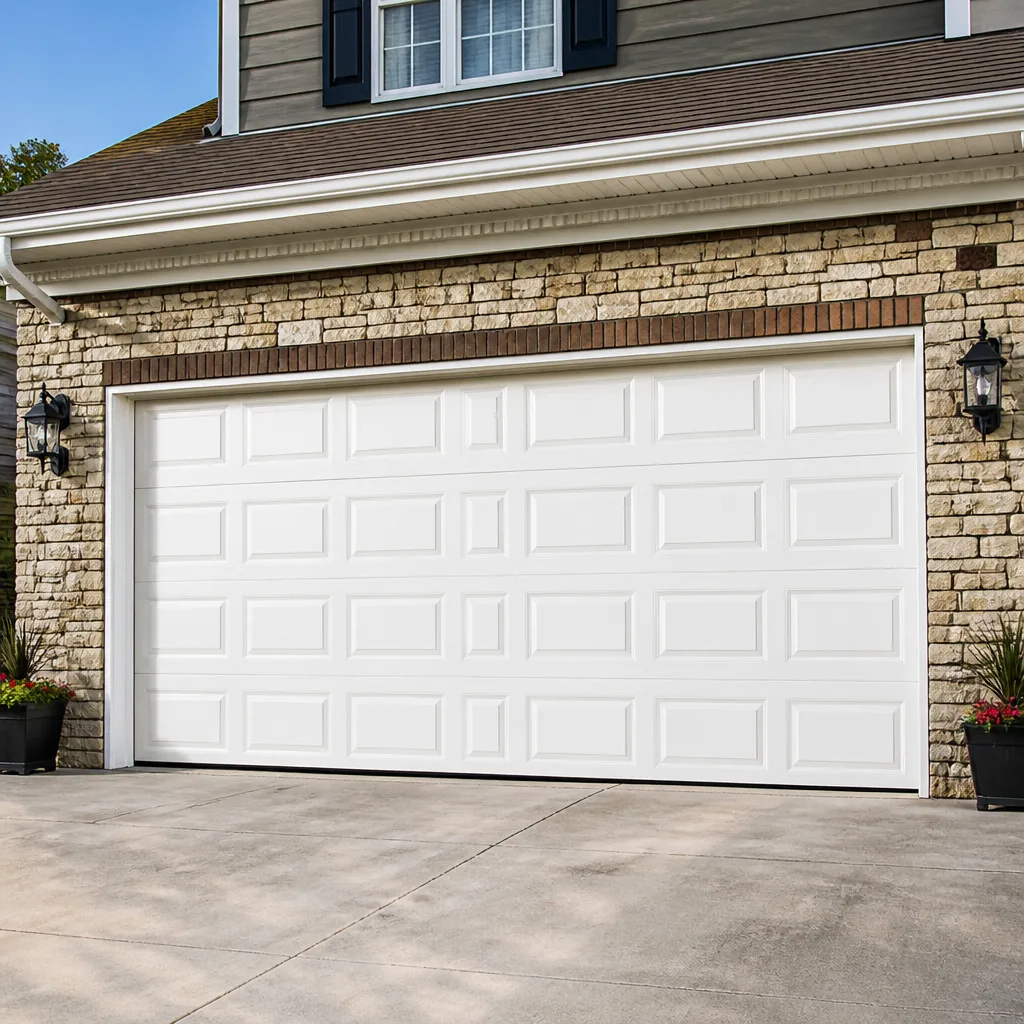 Raised-panel steel
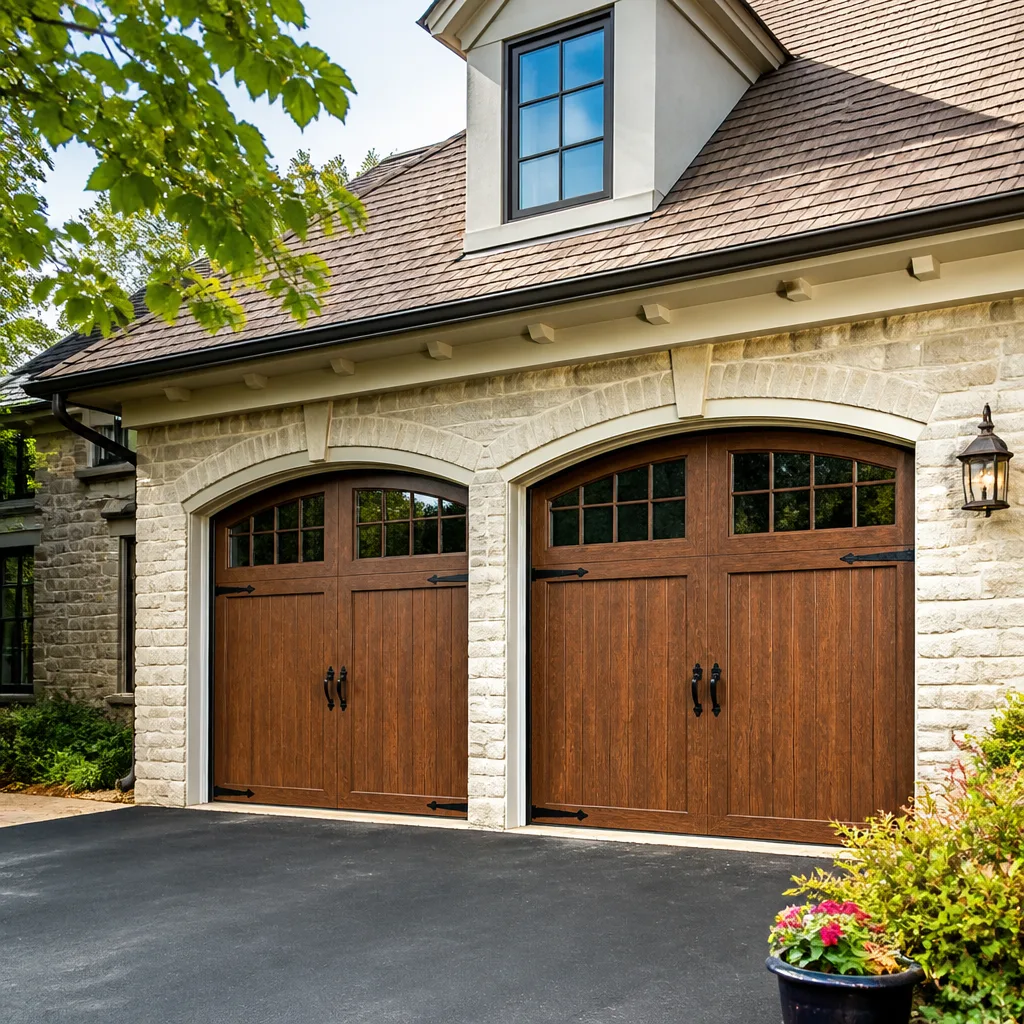 Carriage house
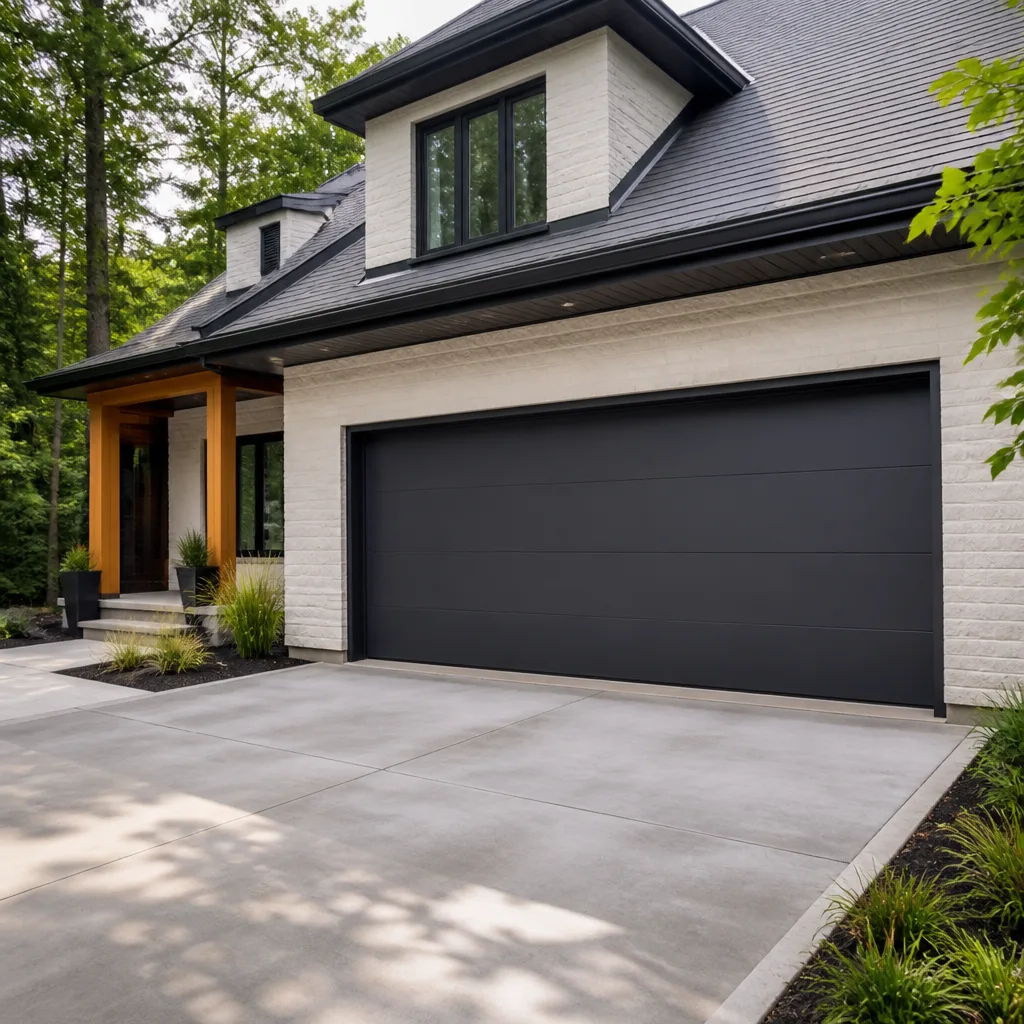 Modern flush
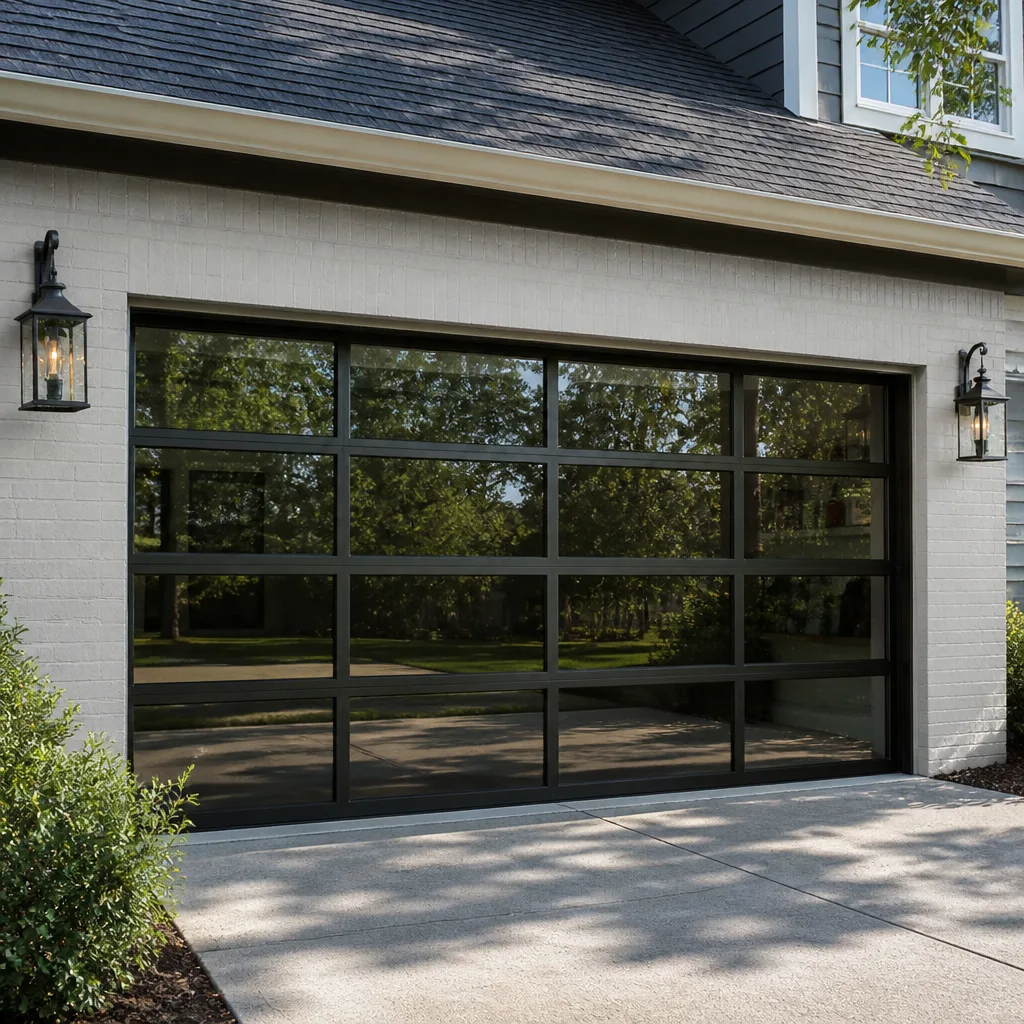 Full-view glass
 LiftMaster openers
 Chamberlain openers
Full 25-point door and opener safety check with every visit - springs, cables, rollers, tracks, and your LiftMaster or Chamberlain opener included
You get a price before we start. It does not change when the pro arrives.
Get your free estimateGarage Door Repair Troubleshooting in Renton: Common Problems and How to Fix Them
A garage door that reverses before it closes and a door that won’t move at all look like two completely different failures. Often they come from the same place: a sensor that isn’t reading correctly or a limit switch that’s out of adjustment. Treating them as separate mysteries is where homeowners lose time and money, because they start replacing parts at random instead of reading the symptom first. In our experience, nearly every garage door problem falls into one of six mechanical categories, and knowing which category you’re in cuts diagnostic time in half. This guide teaches you to read your door’s behavior the way a technician does, from a Renton driveway, so you can decide what’s safe to touch and what needs a pro.
Quick Answer
Most garage door problems trace back to one of six systems: the sensors, the springs, the tracks and rollers, the opener’s logic board or limits, the cables, or the balance of the door itself. Sensor and photo-eye issues are safe to check yourself, and limit and force adjustments on the opener are usually DIY-friendly. Springs, cables, and the torsion assembly carry serious injury risk and should go to a trained technician, no matter how handy you are.
Styles & brands we work with
- Raised-panel steel
- Carriage house
- Modern flush
- Full-view glass
- LiftMaster openers
- Chamberlain openers
Table of Contents
- Why Six Systems Explain Almost Every Garage Door Failure
- Symptom-to-System Map: Match the Behavior to the Part
- How Renton’s Weather Changes the Way Doors Fail
- The Safety Test Sequence to Run Before Touching Anything
- What’s Safe to Fix Yourself and What Isn’t
- How to Describe Your Problem So the Repair Call Takes 20 Minutes
- Brand Matters: Why We Ask What Opener You Have
- When It Can’t Wait: Same-Day and Emergency Triage
Why Six Systems Explain Almost Every Garage Door Failure
A garage door is a balance machine. The springs hold the weight, the cables and drums transfer that tension, the tracks and rollers guide the panels, and the opener provides just enough push to start and stop the motion. When one of those six systems drifts out of spec, the door tells you which one with a specific behavior. That’s the core of garage door repair: not guessing at the loudest part, but matching the behavior to the mechanism.
The six categories we work through on every call:
- Safety sensors (the small photo-eyes near the floor): cause reversing, intermittent stopping, and “door goes up but not down” complaints.
- Springs: a broken spring makes the door feel impossibly heavy, causes snapping sounds, and leaves a visible gap in the coil.
- Tracks and rollers: binding, grinding, or a door that sags on one side usually points here.
- Opener logic and limits: a remote that stops working, a door that reverses mid-travel without an obstruction, or a light that flashes a code.
- Cables and drums: slack or snapped cables, a drum that won’t spool evenly, and doors that hang crooked.
- Door balance and hardware: hinges, bearings, and panel alignment that quietly add friction until the opener can’t overcome it.
Reading the symptom correctly before you call saves you from describing “it’s broken” and lets us bring the right parts the first time. It also tells you whether you’re standing in front of a two-minute fix or a job that belongs to a technician.
Symptom-to-System Map: Match the Behavior to the Part
This is the fastest way to narrow down a failure. Find your door’s behavior in the left column and you’ve got your likely culprit and your next step.
Door reverses before it closes
Sensors are the first suspect. Photo-eyes can be dirty, knocked out of alignment, or blocked by a spiderweb or a leaf. The logic board is the second suspect if the eyes look clean and aligned. Safe to check yourself.
Door won’t move at all
Check the opener’s power and the manual release. If the opener runs but the door doesn’t travel, the trolley or the opener’s drive gear may have failed. If nothing happens at all, it’s the opener. A garage door opener repair call handles the motor, logic board, and remote side of it.
Door grinds or squeals on the way up
Tracks and rollers. Rollers wear flat spots, tracks get slightly out of square, and the panels drag instead of glide. Lube the rollers first; if the noise stays, a technician should check the track alignment before it wears the panels.
Door sags on one side
A cable is slack or a spring is losing tension on that side. Sometimes it’s a bent track. Never ignore this one; a door that travels crooked can drop a cable drum and bring the door down.
Spring snapped, door suddenly heavy
Broken torsion or extension spring. You’ll usually hear the snap. Don’t run the opener; the motor will strain and can burn out trying to lift the dead weight. This is a spring call.
Remote or keypad stops responding
Battery first, then programming, then the opener’s radio receiver. Brand matters here, which is why we ask whether you’re on a LiftMaster, Chamberlain, Craftsman, or Genie unit before we arrive.
How Renton’s Weather Changes the Way Doors Fail
Puget Sound weather does specific things to garage doors, and it helps to know which failures are seasonal rather than random. Renton sits between the Cascade foothills and the Sound, which means cool, wet winters and dry, warm summers. That cycle moves metal around.
The big one is spring tension. Steel springs contract slightly in the cold and relax in the heat, so a door that balanced perfectly in July can feel heavy by January. That’s not the spring failing; it’s a tension adjustment. But a tension adjustment on a torsion spring is still a high-tension job, so it belongs to a technician.
Humidity affects tracks and hinges more than anything else. Moisture tracks into the steel rollers and hinge pins, rust builds up quietly, and the door starts to bind in the spots you can’t easily see. A little lubrication on the rollers and hinges handles most of this before it becomes a track replacement.
Temperature swings also push on opener logic boards. The boards expand and contract with the seasons, and a solder joint that’s marginal in the shop can fail in a cold garage. When a Craftsman or Genie opener starts acting up only in the morning, that’s often a board issue rather than a remote problem.
One more Renton note: many homes near the Highlands and Kennydale have garages that face the weather side of the house, so windblown rain gets into the door’s bottom seal and the track ends. When the seal holds water, the rubber starts to split and you’ll see daylight under the door. That’s a seal job, not a door replacement.
The Safety Test Sequence to Run Before Touching Anything
Before you touch a single bolt, run the same sequence we run. It rules out the dangerous stuff first, so you never have to guess whether the door is safe to test.
- Stand clear of the door path. Confirm nothing is under the door and no one is inside the garage for the next step.
- Pull the manual release. With the opener disconnected, lift the door about halfway by hand. It should feel light and stay put. If it drops or feels very heavy, stop and call for spring service.
- Check the sensors. Look for the two photo-eyes near the floor. Wipe them clean and confirm the indicator lights on both are steady, not blinking.
- Reconnect the trolley and run the door with the wall control. Watch whether it travels smoothly and reverses properly when you pass an object through the beam.
- Test the auto-reverse and the force setting with a small object in the path. If the door presses on the object before reversing, the force is set too high.
- Listen for changes. A new grind, a pop, or a snap during the test tells you which system to check next.
If step 2 fails, do not continue. A heavy door with a broken spring is not a door to test; it’s a call. Springs, cables, and torsion hardware store enough energy to cause serious injury, and that’s a category no homeowner should work in.
What’s Safe to Fix Yourself and What Isn’t
We’d rather save you a service call than book one you don’t need. Here’s how we sort safe fixes from the ones that need a technician.
DIY-safe
- Photo-eye cleaning and alignment. Wipe the lenses and loosen the bracket screws enough to aim them at each other.
- Limit and force adjustments on the opener, following the manual for your brand.
- Batteries and remote reprogramming on LiftMaster, Chamberlain, Craftsman, and Genie openers.
- Lubrication of rollers, hinges, and the torsion tube (not the springs themselves).
- Weather seal replacement on the bottom of the door.
- Visual inspection of the springs, cables, and tracks for obvious damage or rust.
Professional only
- Torsion spring replacement or adjustment, which carries real injury risk regardless of how experienced you are.
- Extension spring replacement, same reason.
- Cable replacement or rewinding.
- Track straightening and hinge replacement when the door is under spring tension.
- Opener replacement or logic board repair if you aren’t comfortable with the wiring.
Springs are the most dangerous component in your garage door system, and we handle them so you don’t have to. If a spring or a cable is in play, that’s when a trained technician earns their keep. The rest of the list is fair game, and your manual for your brand will get you through most of it.
How to Describe Your Problem So the Repair Call Takes 20 Minutes
The best thing you can do for a fast repair is describe the problem accurately. A vague call means we show up ready for one thing and find another. A specific one means we arrive with the right parts and finish in a fraction of the time. Here’s what we ask for, and why.
- What the door does, not what you think is broken. “It goes up about two feet then reverses” tells us more than “I think the sensor is bad.”
- When it started. After a storm, after a power flicker, after someone hit the door, or gradually over weeks.
- What you already tried. A new battery or a reset matters. If you tried something, we don’t repeat it.
- Opener brand and model. LiftMaster, Chamberlain, Genie, or Craftsman tells us which logic board and limits we’re working with.
- Door brand if you know it. Clopay, Amarr, Wayne Dalton, and Raynor each build their panels and hardware differently.
- The sound. Grinding, popping, or a hard clunk each point to a different system.
- The door’s age and last service. A door that hasn’t been adjusted in years has a different baseline than one serviced recently.
Do that, and the diagnostic phase is short. Do it by text or a quick call and we can often tell you whether it’s a sensor fix or a spring job before we head out.
Brand Matters: Why We Ask What Opener You Have
Brand is not small talk. Every opener brand has its own limit-setting procedure, its own remote programming steps, and its own weak points. A LiftMaster and a Craftsman can fail in different ways for the same symptom. We service eight major brands: LiftMaster, Chamberlain, Genie, Clopay, Amarr, Wayne Dalton, Craftsman, and Raynor, so the technician who arrives is already familiar with the hardware in your garage.
Two brand examples to show why it matters:
- Craftsman openers are common on older doors and have a limit and force adjustment layout that trips up homeowners following a generic YouTube tutorial. Getting the force setting wrong is a common cause of reversing doors.
- Clopay and Amarr doors often use torsion springs sized to the panel weight, so replacing a spring with the wrong gauge throws the door out of balance. Getting the spring right matters for both safety and the opener’s life.
- LiftMaster and Chamberlain share engineering, so a remote programming trick for one usually works for the other. If you’ve been handed the wrong instructions, that’s why the remote won’t pair.
When it’s time for a new door or opener, brand also changes the garage door installation plan: measure, order, and schedule are all tied to the brand and the panel size. That’s not a same-day job; it’s a free measure and a written price before anything is ordered.
When It Can’t Wait: Same-Day and Emergency Triage
Some failures are annoying, and some leave the house open or the car trapped. Triage is simple: any of these is an emergency and should skip the DIY checklist.
- A door that is stuck open and can’t be closed by hand or opener.
- A door that dropped suddenly or is hanging crooked with a slack cable.
- A spring that snapped and the door is now heavy to lift.
- A door that reverses in the middle of traffic because the sensor won’t stay aligned.
If an opener dies and the door is down, we can often schedule a same-day repair. If it’s a spring job, that’s a spring technician’s call. Emergency work is a core part of what we do, and we answer 24/7. Fast dispatch from 7am to 7pm, Sunday through Friday. A call outside dispatch hours is booked into the next opening, Sunday through Friday, 7am to 7pm.
One more thing for triage: don’t force a door that’s hanging. A door that’s off its track under spring tension can swing and hit someone. Leave it in place and call.
Common Mistakes to Avoid
- Running the opener on a broken spring. The motor strains against the dead weight and can burn out in minutes. Stop the opener and call for spring service.
- Replacing a remote when the logic board is the problem. If two remotes fail at once, the opener’s receiver is the culprit, not the batteries. A remote test is quick and cheap; a board replacement is not.
- Loosening the torsion spring to “check” it. Torsion springs are under enormous tension. Never turn the winding bolts or cone screws on a spring you don’t understand.
- Ignoring a door that sags on one side. A slightly crooked door will wear the tracks and the cables faster. It’s a cheap fix early and a big one late.
- Skipping lubrication in a wet Renton winter. Steel rollers and hinges rust quietly. A small amount of lubrication on the moving parts prevents most binding before it starts.
- Adjusting the force setting to hide a symptom. Turning up the force to overcome a binding door solves nothing and can break an auto-reverse safety feature. Find the binding point instead.
- Buying a new door before a repair estimate. A sagging or noisy door is often a track and roller fix, not a panel replacement. Get the estimate first.
See the difference
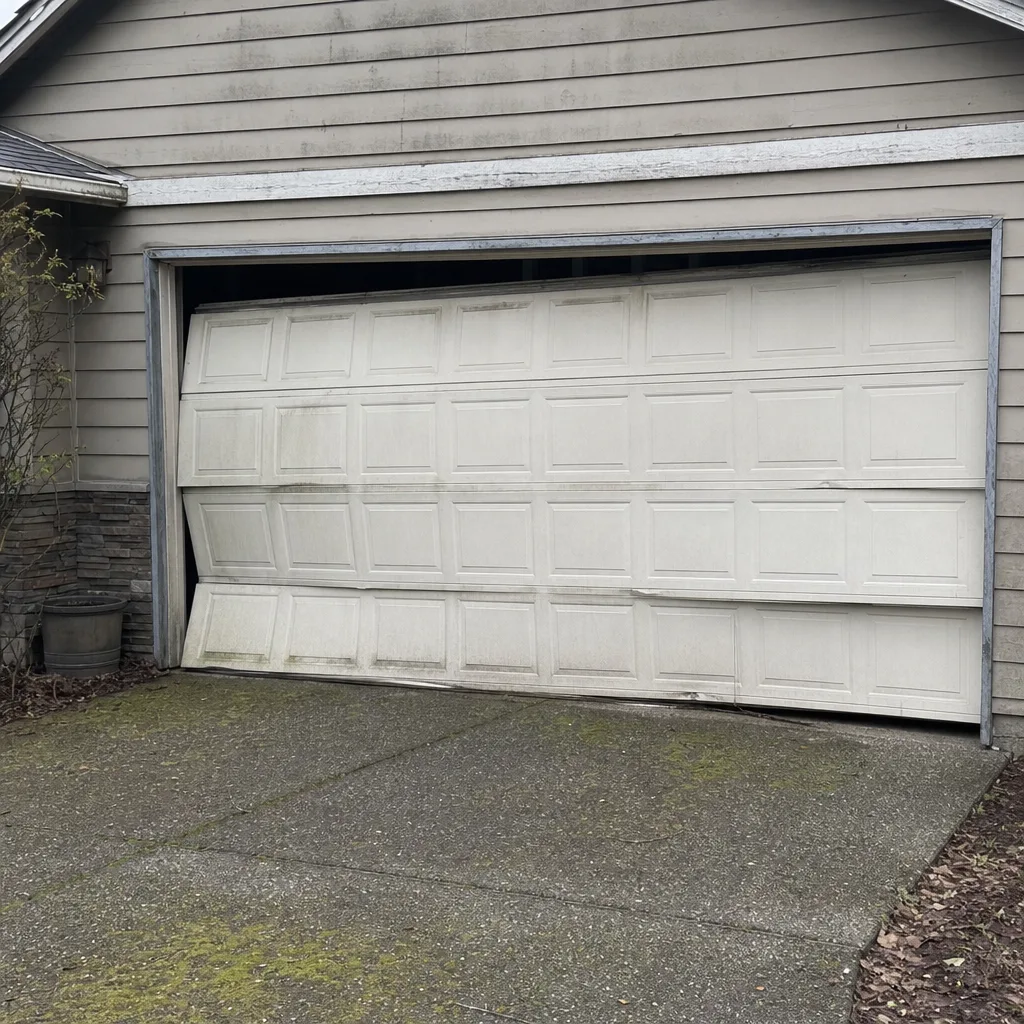 Before
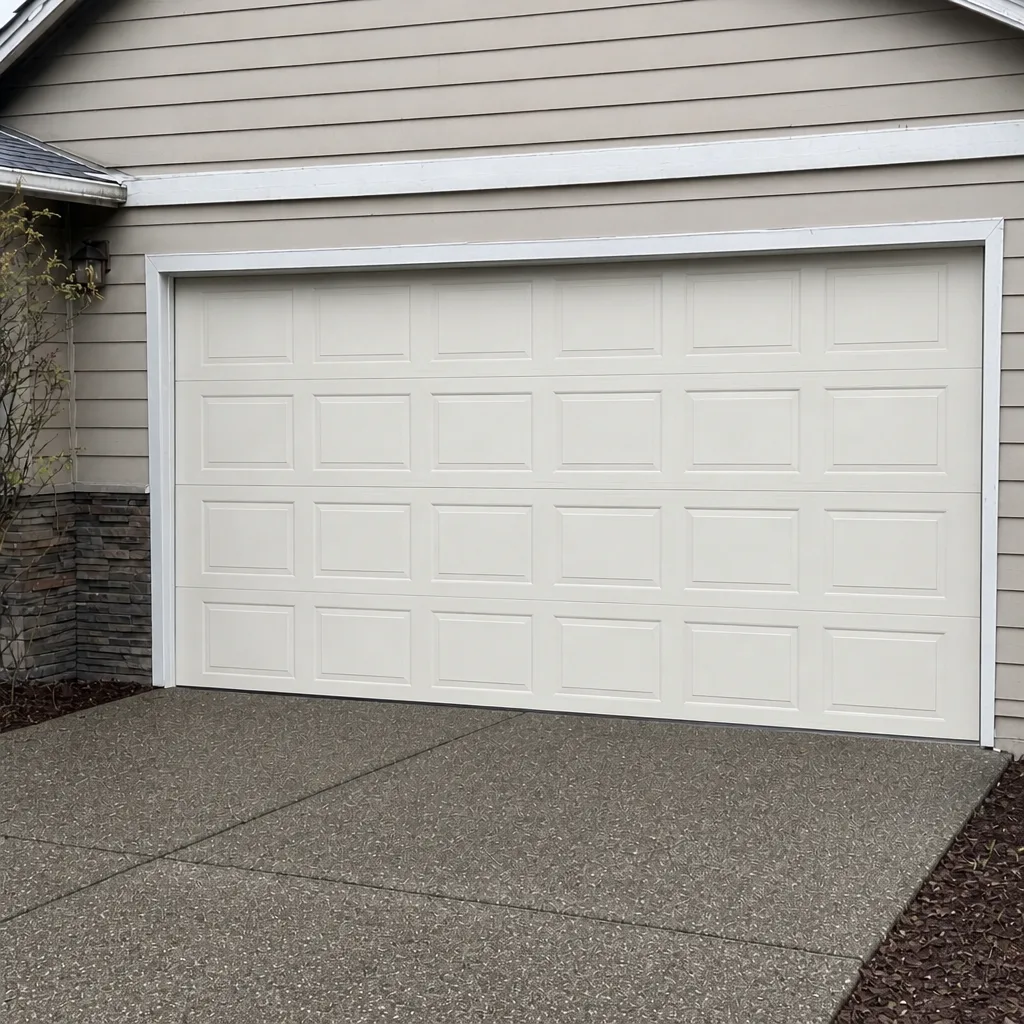 After
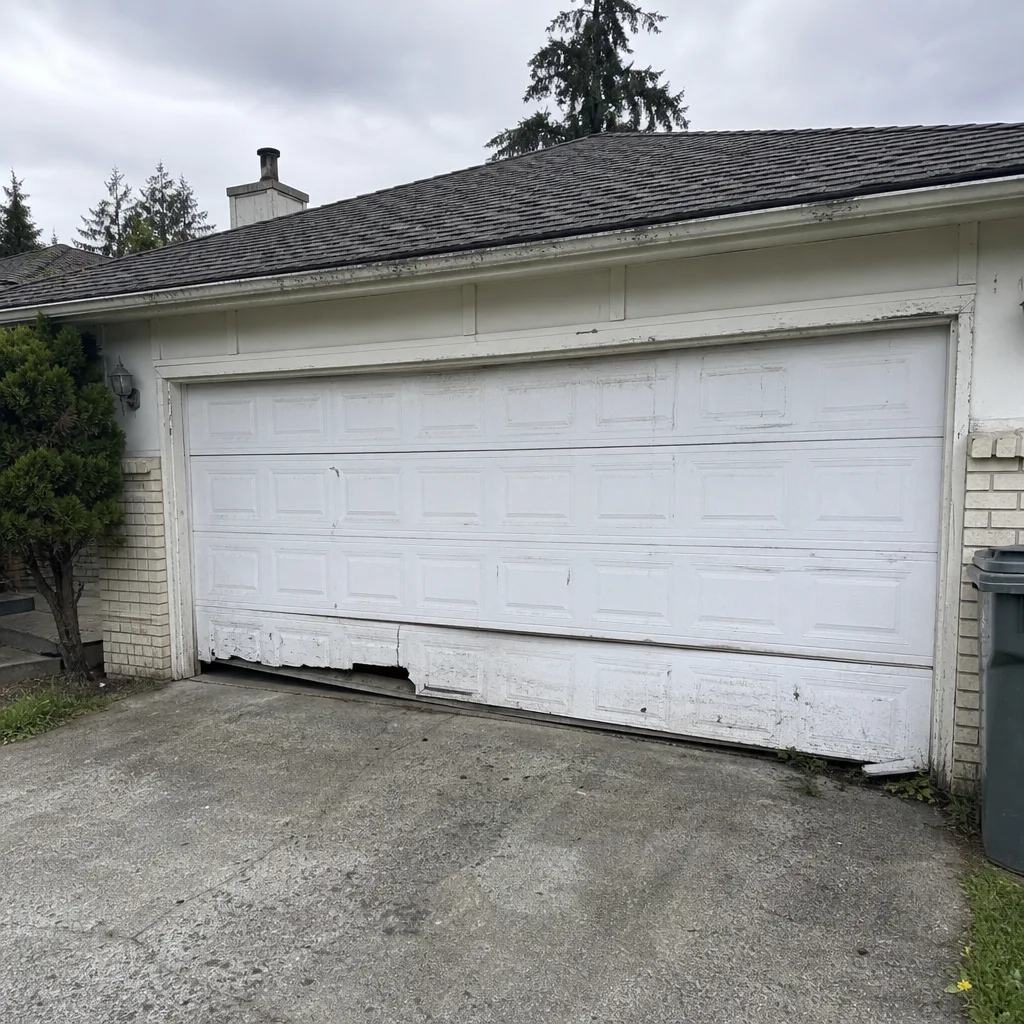 Before
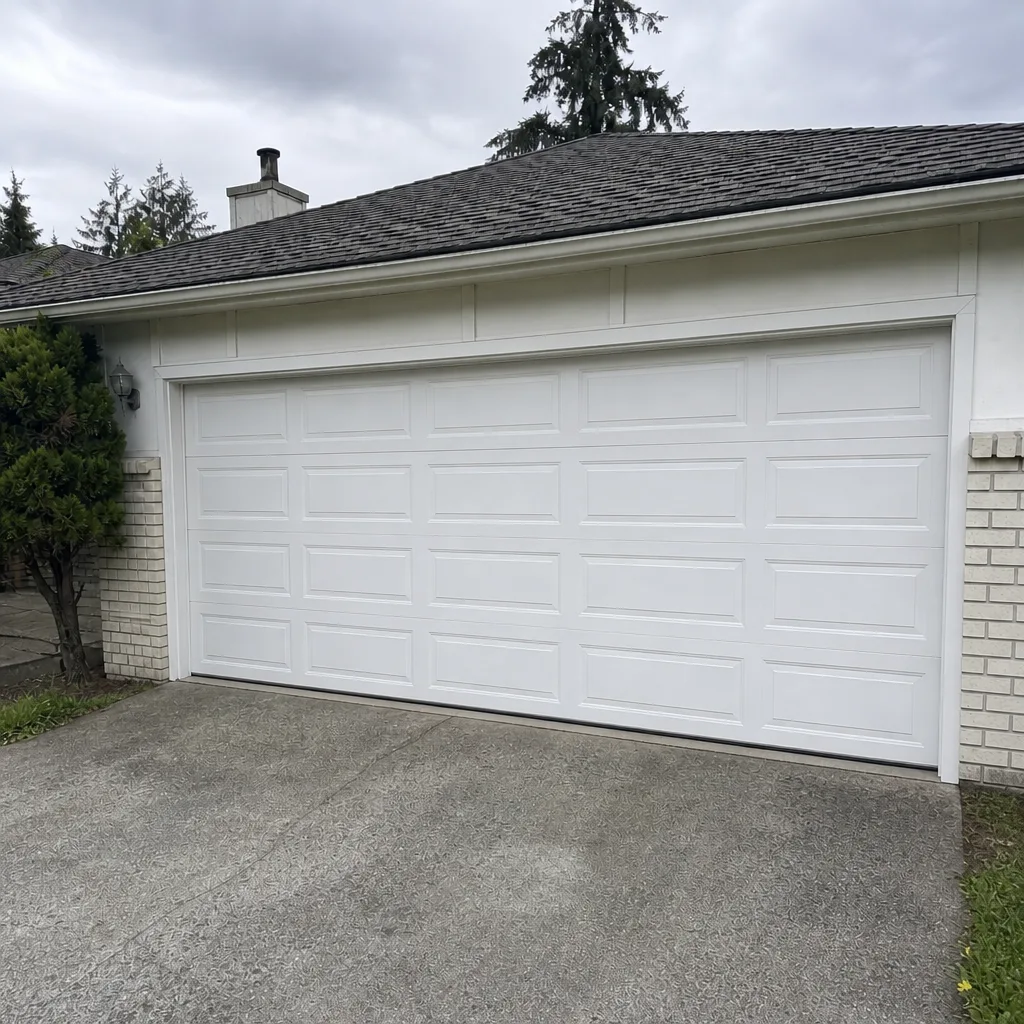 After
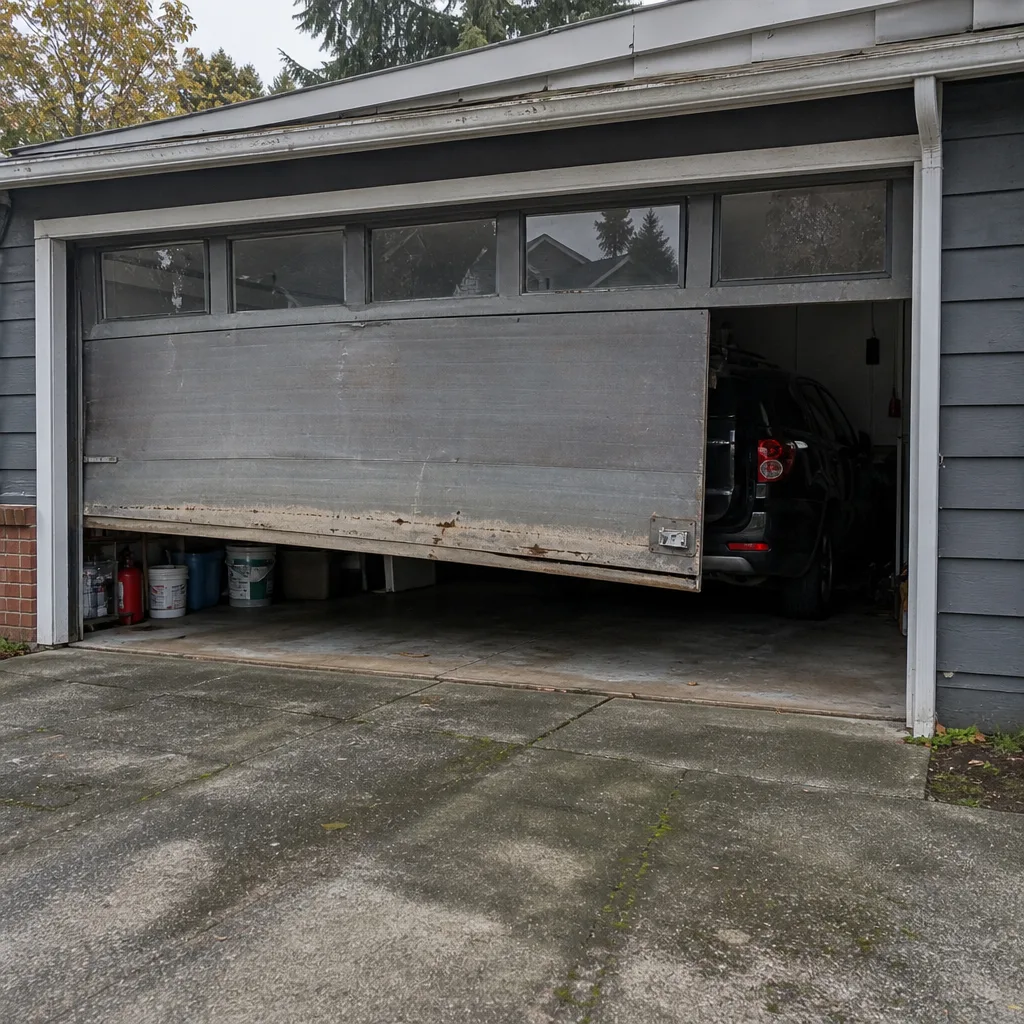 Before
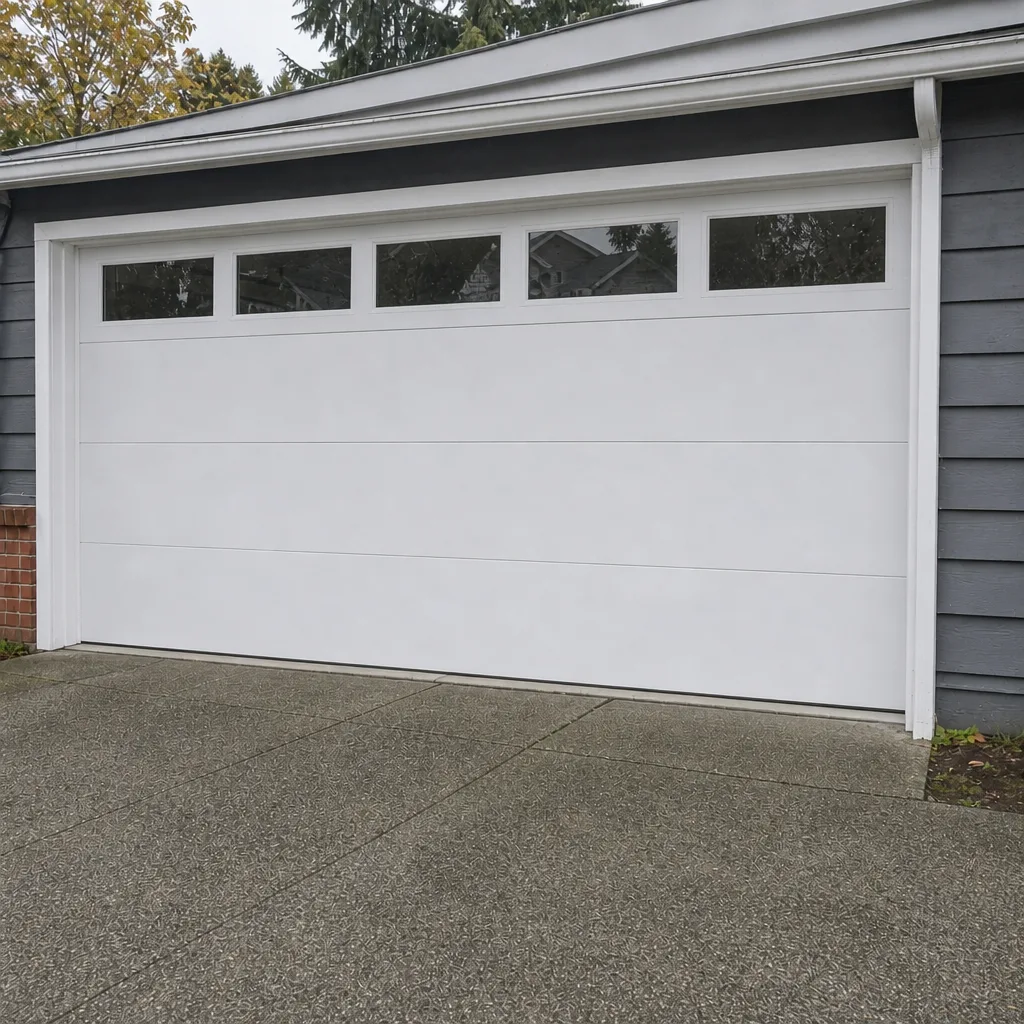 After
When to Call a Professional
Call a technician when the door is heavy, off balance, or hanging crooked. That’s the line between a maintenance fix and a component under high tension. Call for any broken spring or cable, for a door that won’t travel, and for an opener that lights up but doesn’t move. Call for track damage, for a door that reverses on every cycle after a sensor clean, and for any opener that needs a new logic board or full replacement.
Renton Garage Door Repair Pros offers free estimates in Renton. Call (833) 508-9224. Our technicians have up to 13 years of experience, we service LiftMaster, Chamberlain, Genie, Clopay, Amarr, Wayne Dalton, Craftsman, and Raynor, and the price is quoted and agreed before any work starts. One call covers it: repair, opener repair, spring replacement, installation, and emergency service. We answer 24/7. Fast dispatch from 7am to 7pm, Sunday through Friday.
Frequently Asked Questions
Garage door repair in Renton varies by job, from a sensor adjustment to a spring replacement, and the written estimate sets the price. The typical range depends on which of the six systems is at fault, so the estimate comes after a free on-site look. Call (833) 508-9224 for an exact quote; estimates are free.
Yes, a door that won’t close is a same-day priority. We answer 24/7, and fast dispatch runs from 7am to 7pm, Sunday through Friday. A call outside dispatch hours is booked into the next opening, Sunday through Friday, 7am to 7pm.
The safety sensors are almost always the cause. Dirty photo-eyes, misaligned sensors, or an obstruction in the beam trip the auto-reverse. Clean and align the eyes first; if it still reverses, the opener’s force or limit setting may need adjustment.
No. We quote and agree the price before any work starts, so the written estimate is the price. If we find a second issue, we tell you before touching it.
No. Torsion and extension springs store enough energy to cause serious injury, and that’s true no matter how handy you are. Springs are the most dangerous component in your garage door system, and a trained technician should handle them.
Renton’s cool winters tighten steel springs and can stiffen the door’s movement, so the opener works harder and the limits drift. Cold can also show a marginal opener board. If the behavior is seasonal, a technician can adjust the tension or check the board.
The Bottom Line
Six systems explain nearly every garage door problem, and the symptom usually tells you which one. Run the safety test first, clean the sensors and check the limits before you buy parts, and stop the moment a spring or a cable is in play. Document the behavior, the opener brand, and the sound; that’s what turns a vague repair call into a one-visit fix. Whether you handle the sensor side yourself or hand the whole thing to us, the door is safer and the call is shorter when you read it like a technician. From the Highlands to Kennydale, that’s how we work on doors in Renton.
Call (833) 508-9224 for a free estimate. Back up and secure tonight, and don’t wait for a small grind to become a big repair.
Written by the team at Renton Garage Door Repair Pros.